The Best Time to See Wildlife in Panama
When to see wildlife on the Panama Canal: the dry season from mid-December to the end of April, rain month by month, and the hawk migration over Ancon Hill.
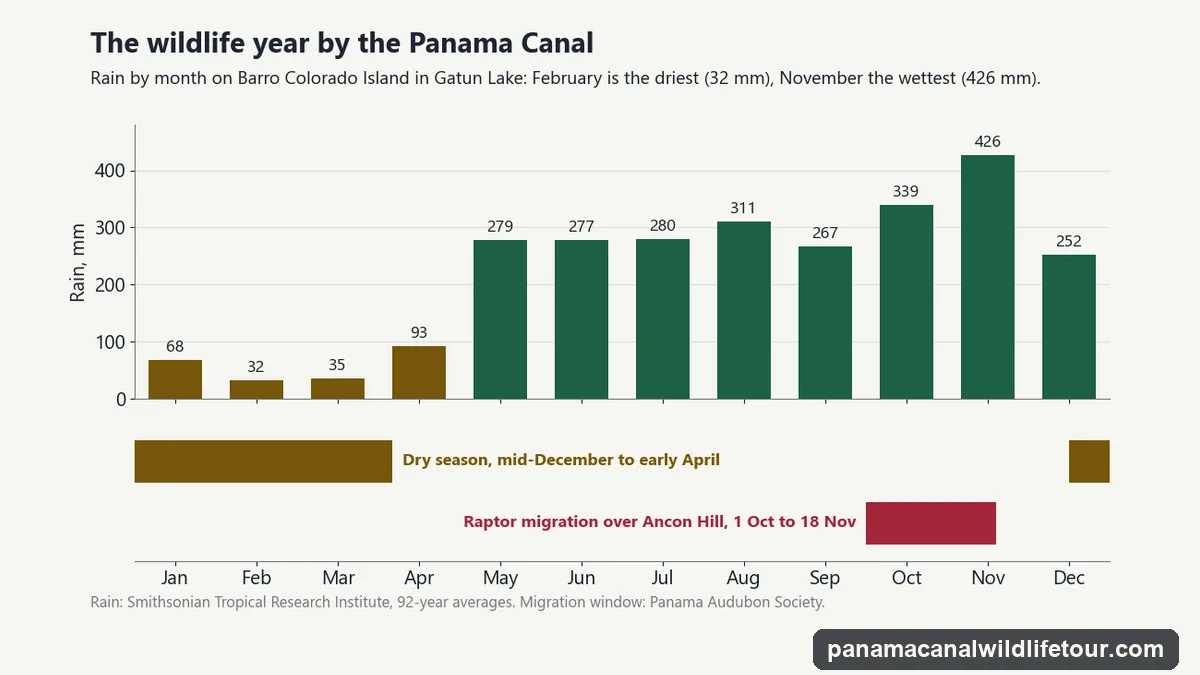
The best time to see wildlife along the Panama Canal is the dry season, from about mid-December to the end of April, when the mornings are clearest and the trails driest; February is the driest month on Gatun Lake. The wildlife does not leave in the rainy season, from May to November, and the tours run all year, but November is the wettest month. Birders have a season of their own: from 1 October to 18 November, migrating hawks and vultures cross Panama City in their hundreds of thousands. Monkey Sightseeing Panama’s wildlife tour runs in any month, from $60 a person (checked October 2026), with raincoats lent.
The wildlife year
| Months | Rain on the lake | What it means for wildlife |
|---|---|---|
| January to March | 32 to 68 mm a month | The dry heart of the year: dry trails, clear mornings, the birding lodges’ high season |
| April | 93 mm | The dry season ends; the first rains come |
| May to September | 267 to 311 mm a month | The rainy season: green forest, showers most days, wet trails |
| October and November | 339 and 426 mm | The wettest months, and the raptor migration over Panama City |
| December | 252 mm | The rains ease and the dry season starts around the middle of the month |
Average monthly rain from the Smithsonian Tropical Research Institute’s gauge on Barro Colorado Island, in the middle of Gatun Lake, over 92 years. About 2,655 mm fall in a year.
Panama’s meteorological service describes the same pattern for the country: the rains set in in May and last to November, the wettest months are October and November, January to March is dry, and December and April are the months of change.
The dry season, mid-December to the end of April
The dry season runs from about mid-December to the end of April, and on the lake itself, by the Smithsonian’s long record, from about 19 December to 2 May. This is when the wildlife tour’s boat ride and forest walk are most comfortable, and when Pipeline Road’s dirt track is firmest underfoot.
Check dates for the wildlife tour
The rainy season, May to November
The animals are all still there. The forest is at its greenest, the howlers call, and the sloths sit where they always sit. What changes is the walking and the light: showers, mud on the trails, and some mornings under cloud. The wildlife tour runs in all weather and lends raincoats; bring a light rain layer for the open boat anyway, and a dry bag for the camera.
The raptor migration, 1 October to 18 November
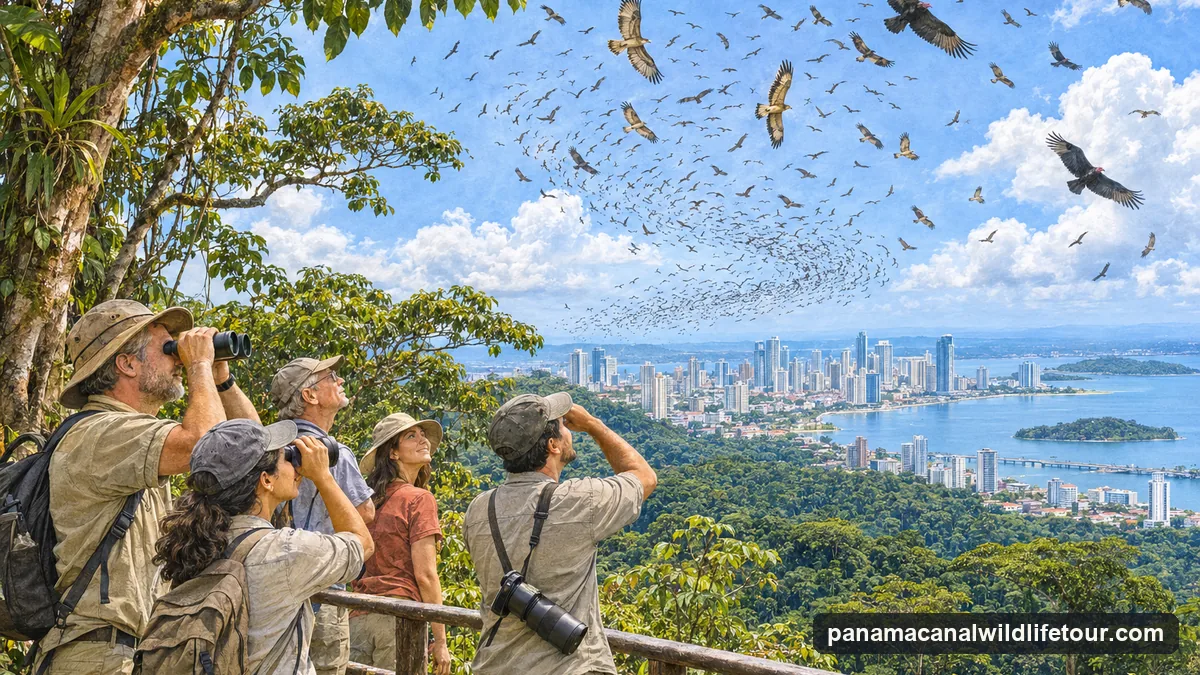
Every year from 1 October to 18 November, migrating birds of prey cross the sky over Panama City on their way south. Since 2004 the Panama Audubon Society has counted 15 species of migrating raptors from the top of Ancon Hill; the commonest are turkey vultures, Swainson’s hawks and broad-winged hawks. Its estimate for 2018 was 2,914,357 birds, and it counts Ancon Hill among the five places in the world with migrations of more than a million birds.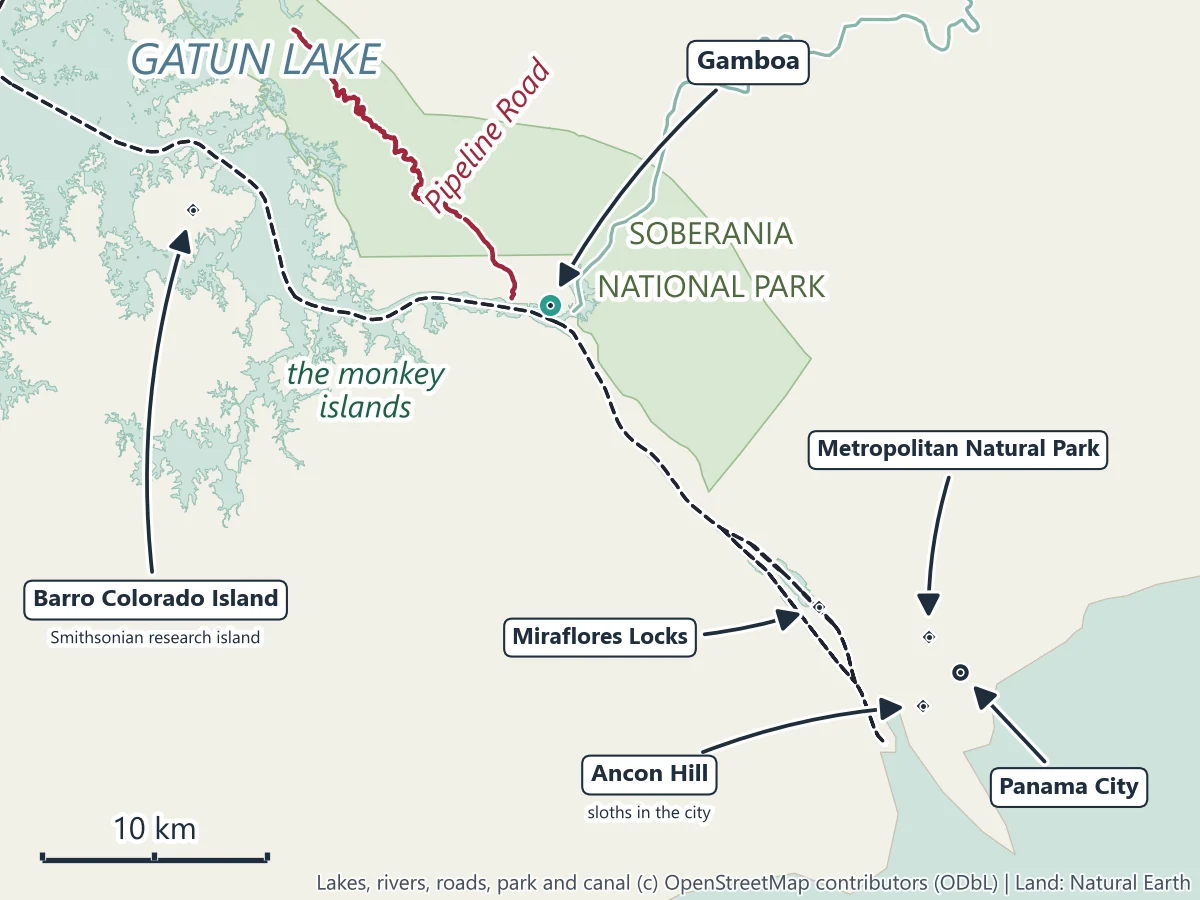
Ancon Hill is a forested reserve in the middle of the city; the sloths guide has the early walk there, which looks for sloths and toucans on the way up.
The best hour of the day
Early. Pipeline Road opens at 6:30 am, and the guided walk on Ancon Hill has a 6:30 am start aimed at wildlife and a later one aimed at the views. Where a trip offers a morning departure, take it: the trail is cooler and the forest quieter.
Who should pick something else
- You need a sure sloth in any weather: the sanctuaries in Gamboa and Clayton; see where to see sloths.
- You are a birder in the dry months: January to March is the time for Pipeline Road birding.
More Trips with Open Dates
More Rainforest and Canal Trips with Open Dates
Wildlife boats, rainforest walks, birding and the canal locks, with live availability. Times and cancellation terms are on each listing.
Book the Wildlife Tour for Your Dates
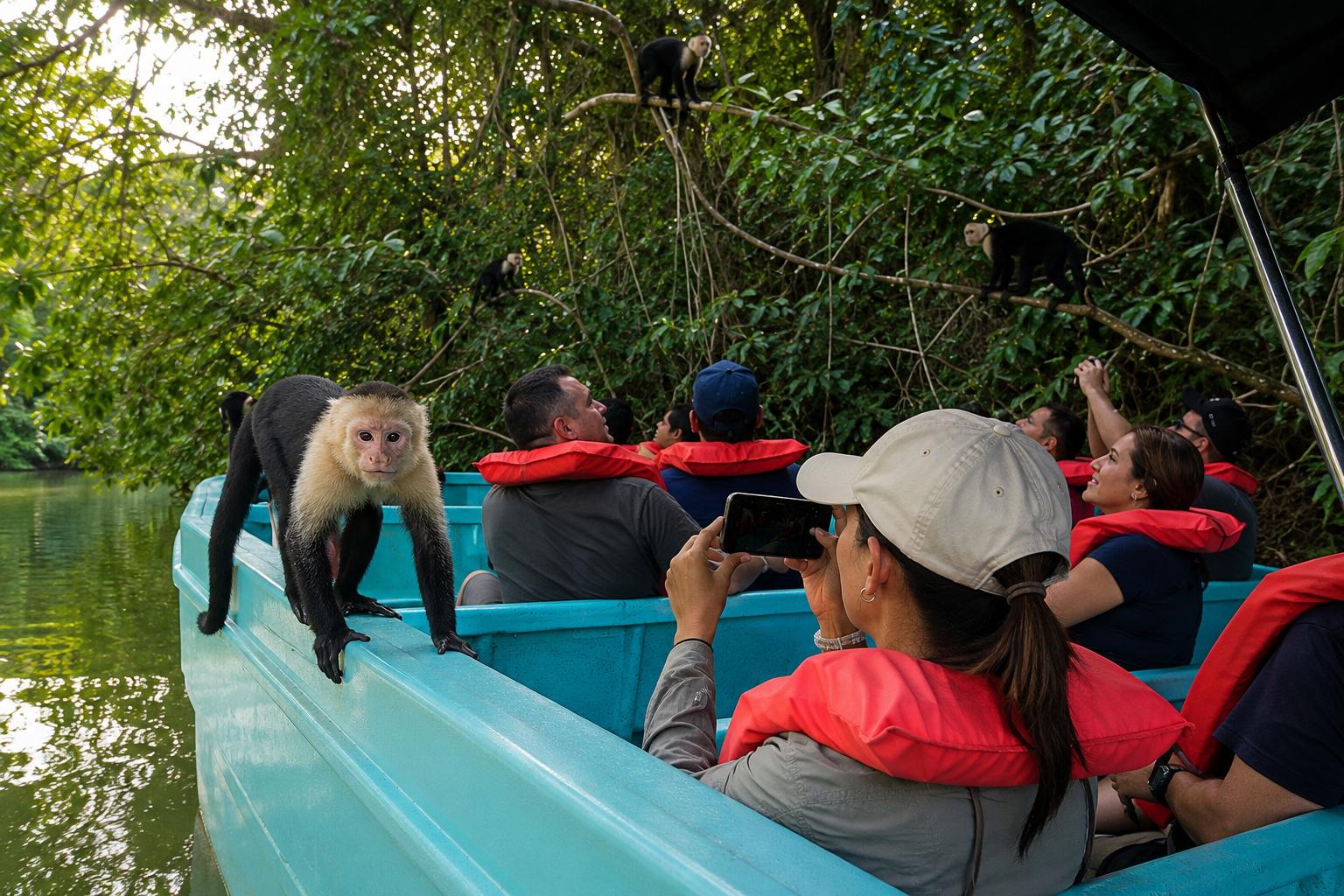
Monkey Sightseeing Panama's five-hour wildlife tour runs all year, rain or sun, with raincoats lent and hotel pickup in Panama City.
See dates